

We all want to feel confident, and the way our clothes fit can play a big part in this. If your pants are too long, or your shirt is bunching at the waist, it’s hard to focus on being your best self.
This doesn’t come down to just the number on the tag, but also the fit. The challenge is that clothes off the rack are made for mannequin-like proportions, and don’t account for the wide range of men’s bodies.
An element of this is your height. If you’re not a stock standard 175cm, you might find it harder to find clothes that truly fit you.
To help you work around this, we’re going to break down why fit matters more than the number on the tag, plus highlight the tailoring techniques that can help men of every height look and feel their best.
Key takeaways
- Great style has nothing to do with height and everything to do with fit
- Clothes should work for your body – not the other way around
- Small adjustments can make a big difference to how confident and comfortable you feel
- Both shorter and taller men face common fit challenges, but they’re all fixable
Why off-the-rack sizing doesn’t work for most men
Ever found a shirt that fits your shoulders but nowhere else, or trousers that are somehow too tight and too long at the same time? Here’s why finding the perfect fit is harder than most men realise.
The myth of standard sizing
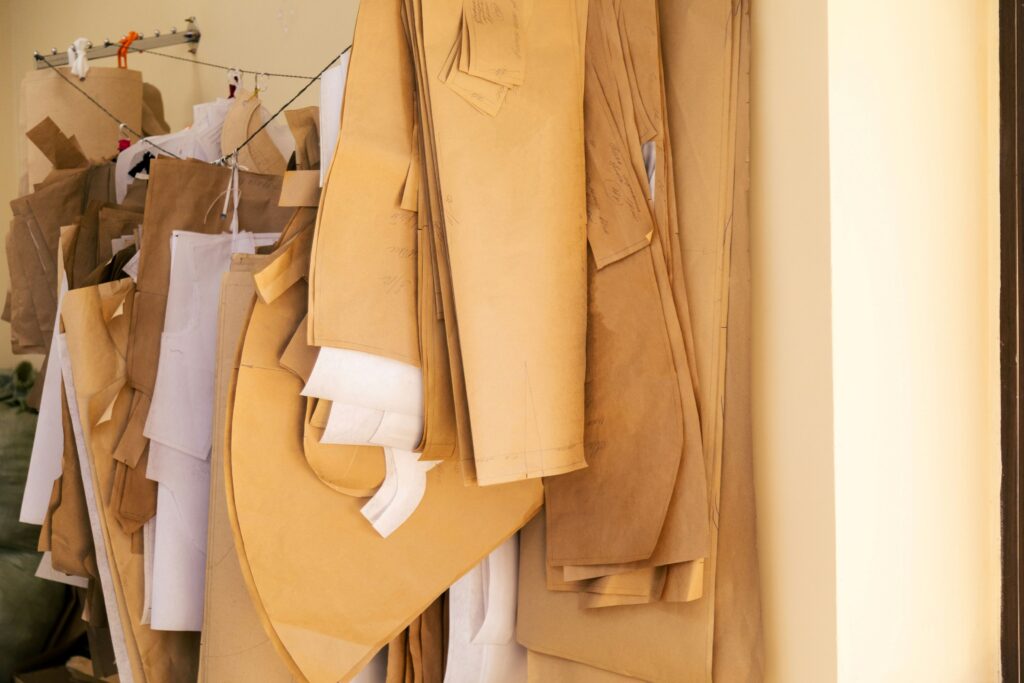
Most menswear is built using what’s known as a pattern block, a standard template based on average body proportions. Sizes are then scaled up or down from that starting point.
Source: Unsplash
The problem here is that bodies don’t scale in predictable ways. A taller man doesn’t automatically need a wider torso, and shorter men don’t necessarily have narrower shoulders. However, with many brands, increasing the size means increasing both the width and length of the garment at the same time.
That’s why so many men find themselves between sizes or compromising on fit.
The compromise most men make
For shorter men, the usual trade-off is buying clothes that fit properly through the shoulders and chest, only to end up with sleeves that swallow their hands or trousers that bunch at the ankle.
Taller men often face the opposite problem. They size up to get enough length through the sleeves or legs, but end up with excess fabric through the waist and torso.
At the end of the day, both short and tall men end up with something that looks “oversized”. If you’re looking for clothes that flatter your body, this makes it hard to highlight your strongest features.
Now, let’s look at how you can overcome this and take your wardrobe to the next level with some simple choices and tailoring options.
Style and fit tips for shorter men
Many shorter men feel like they have a harder time finding fashion that works for them. Shirts are too long, sleeves cover half their hands, and trousers always drag down.
It’s important to note that great style has nothing to do with height. Many of the best-dressed men you’ll see on the red carpet aren’t particularly tall. What makes them stand out is that their clothes fit properly and feel intentional. Here’s how they do it, and how you can too.
Proportion is everything
For shorter men, one of the easiest ways to improve the fit of an outfit is to pay attention to proportions.
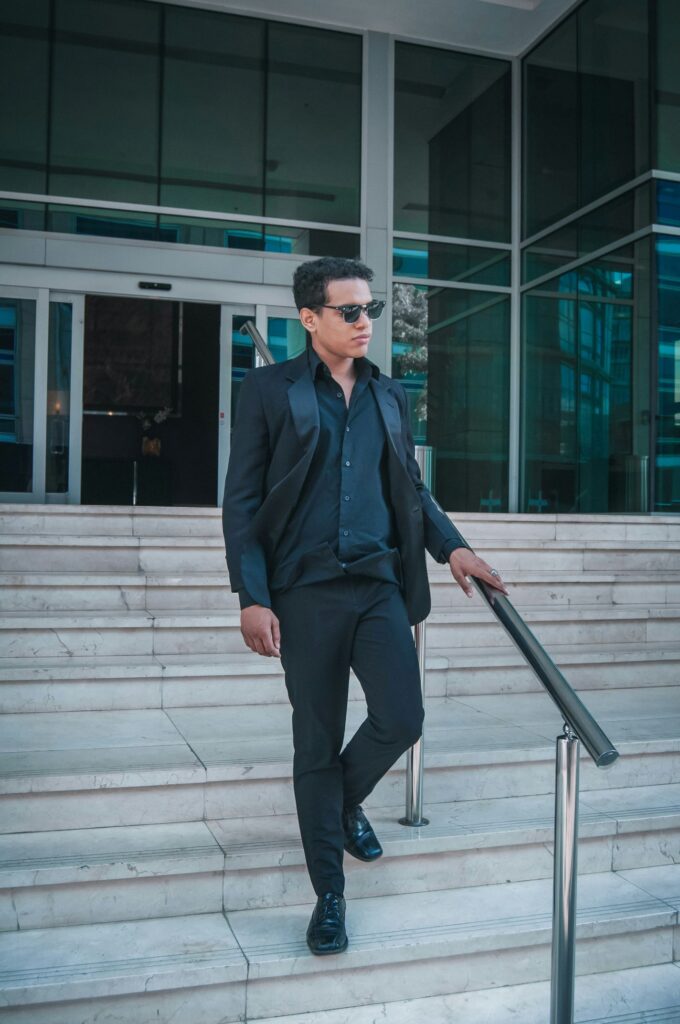
Instead of focusing on the size on the label, look at how each piece sits on your body. A jacket should finish at the right point on your torso, sleeves should stop at the wrist, and trousers should sit neatly on your shoes.
Getting these details right creates a cleaner, more intentional look and helps your clothes fit the way they were meant to.
Buy for fit, then alter the length
One of the most common mistakes shorter men make is buying a smaller size simply because it looks shorter on the hanger. This can leave you with an uncomfortably tight waistband, which can be a confidence killer.
Instead, we recommend focusing on finding trousers that fit comfortably at the waist and jackets that fit properly through the shoulders. (These areas are much harder to alter later.)
From there, your tailor can adjust the length of sleeves and hems to suit your proportions. This creates a much more flattering fit than trying to force yourself into a smaller size.
Source: Unsplash
Don’t forget the taper
When a pair of trousers needs a whole lot of shortening, there’s often more to consider than simply removing some of the length.
If a tailor shortens the hem substantially, they may also need to re-taper the leg to maintain the garment’s original shape. Without this step, trousers can appear wide in the wrong places and lose that clean silhouette they were designed to have.
When you go to a professional tailor, they can ensure your trousers will look balanced from top to bottom.
Style and fit tips for taller men
Finding clothes as a taller man comes with its own set of challenges. Short sleeves and trousers are just the half of it. Once you do find the right length, it can feel too wide everywhere else.
The good news is that height gives you plenty to work with from a style perspective. The challenge isn’t your frame. Here are a few ways to avoid common fit mistakes and create a more polished look.
Avoid the sizing-up trap
One of the most common mistakes taller men make is sizing up purely for extra length. While this can solve the problem of short sleeves or trousers, it often creates another one.
A shirt might finally reach your wrists, but now there’s excess fabric through the waist. This can make the garment feel boxy and oversized.
Create shape through tailoring
Despite this, if you need the extra length, don’t be afraid to buy the larger size. The key is to have your clothes tailored after.
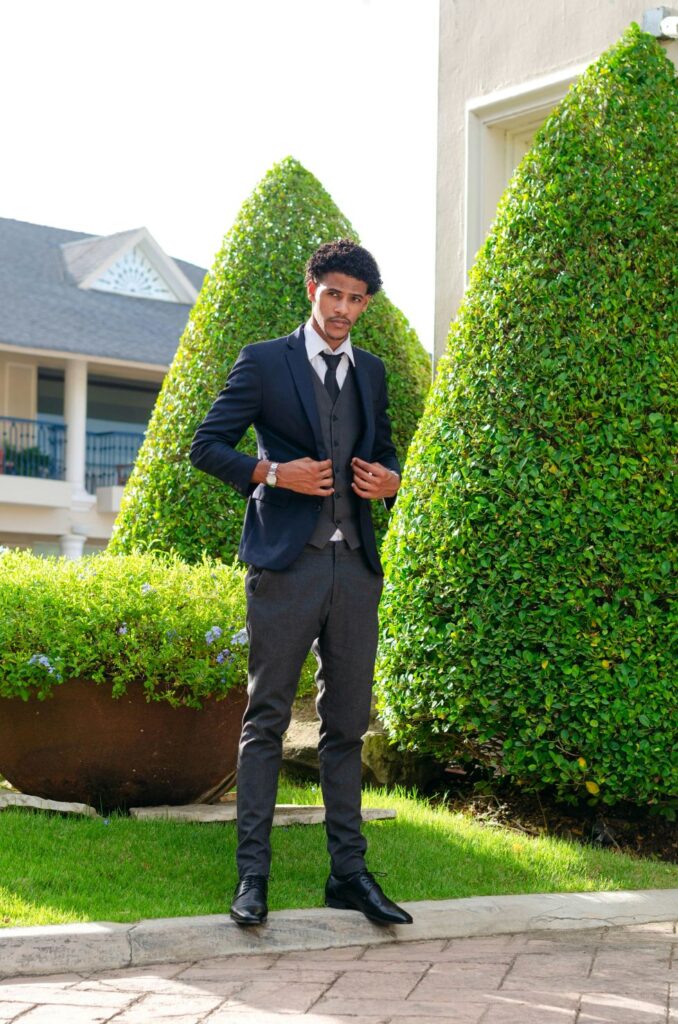
A professional tailor can take in the side seams of a shirt or jacket, or add darts through the back to create more shape. This allows you to get the sleeve and body length you need without sacrificing a flattering fit through the torso.
Source: Unsplash
Make the most of hidden fabric
Before replacing a pair of dress trousers that feel too short, take them to a tailor. Many quality trousers are made with extra fabric folded inside the hem, known as a seam allowance.
Depending on the garment, a tailor may be able to let out this fabric and add extra length to the leg. While it won’t work on every pair of trousers, it’s often enough to create a better fit and save you from buying a replacement.
Why professional menswear alterations are worth it
The truth is that fit matters far more than the label on your clothes. A perfectly tailored $50 shirt will almost always look better than a $200 designer shirt that doesn’t fit properly.
That’s why professional tailoring is one of the smartest investments a man can make for his wardrobe. Instead of endlessly searching for the “perfect” size, you can buy clothes that fit your shoulders, chest, or waist correctly and adjust the rest to suit your body.
At LookSmart, we provide professional menswear resizing, hemming, tapering, repairs, and tailoring services across Australia.
To get the best result from your fitting, don’t be afraid to be specific about what you want. For example, you might want to show us where you’d like a shirt cuff to sit on your wrist, explain how much of a trouser break you prefer, or bring along the shoes you plan to wear with your outfit. We are happy to help make suggestions and work with you to get the best result.
Source: Unsplash
Getting the perfect fit for any height
Whether you’re shorter, taller, or somewhere in between, finding clothes that fit perfectly off the rack can be a challenge. The good news is that you don’t need to change your body or spend a fortune to look your best.
As we’ve covered, the key is understanding your proportions, buying for the areas that matter most, and using tailoring to refine the fit. Small adjustments can completely transform how an outfit looks and feels.
At LookSmart, we help men of all heights achieve a more comfortable and polished fit through menswear tailoring and alterations. So instead of settling for clothes that are “almost right”, visit your nearest LookSmart store and discover what a custom fit can do for your wardrobe.
FAQs
Should short men try to look taller?
Confidence is the best style tip. Don’t try to fight your proportions. Instead, dress in a way that makes you feel comfortable and confident.
Look at other stylish men who are of a similar height to you and use them as inspiration. These men prove that you can look attractive and put together at every height when you get the fit right.
Some good examples of stylish men who aren’t tall are Tom Holland, Jeremy Allen White, Bruno Mars, Daniel Radcliffe, Dustin Hoffman, and Nick Jonas.
How can I find pants that are the right length for my height?
While everyone’s proportions are different, using inseam lengths is a useful starting point. Measure from your crotch down to the point where you’d like your trousers to finish, or measure the inseam of a pair of trousers you already own and like the fit of.
If you’re shopping online, compare this measurement to the brand’s sizing guide rather than relying on your height alone. This is because two men can be the same height but have different leg lengths, so inseam measurements tend to be more accurate.
If you aren’t able to find pants with a width and length that suit your measurements, visit LookSmart, and we can transform them into your dream pants.
Why do suits sometimes look boxy?
Suits often look boxy off the rack because they’re designed to fit as many body types as possible.
If, when you’re getting your suit, you find that it is looking boxy, some simple alterations, such as taking in the waist or adjusting the sleeves, can create a more tailored silhouette.
What is the average height of men in Australia?
The average Australian man is approximately 175cm tall. However, height varies significantly across the population, which is one reason why standard clothing sizes don’t work equally well for everyone.
Am I considered tall or short in Australia?
There’s no official definition of what counts as short or tall. However, because the average Australian man is around 175cm tall, men below this height are generally considered shorter than average, while those above it are considered taller than average.
In reality, though, factors like your proportions and how your clothes fit often have a much bigger impact on your appearance than a few centimetres either way.