

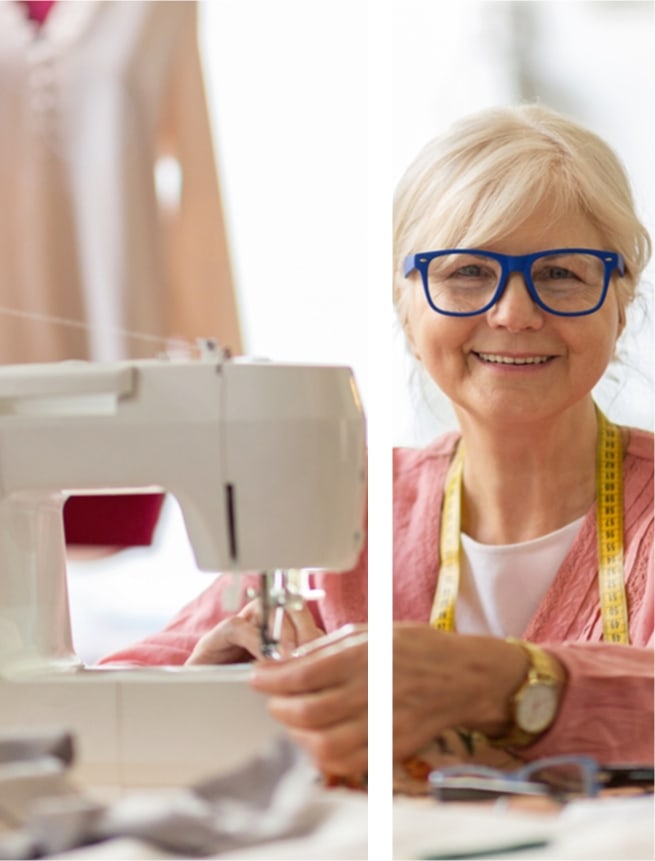
Invisible mending is ideal for those damaged, yet special pieces you want to bring back to life. Perhaps it’s the merino sweater that’s integral to your winter style, or your favourite work blazer that fits like a glove.
If something you love has a small tear or hole, invisible mending can restore it, without visible stitches, patches or changing the way it looks.
That said, it’s not something to try at home. Invisible mending is a specialist skill that takes time, precision and experience. Our team has the tools and the expertise to do it properly. If you need to mend your clothes in a not-so-obvious way, our expert tailors can help. Find your nearest store here.
What is invisible mending?
Invisible mending is a specialist repair technique that restores damaged fabric by reweaving it to match the original. It’s often done by hand, using fine threads taken from the garment itself to recreate the exact weave and texture. The result is a clean, seamless fix that’s almost impossible to spot. Due to this, invisible mending has become the go-to option for fixing high-quality clothes without compromising their look or feel. It works best on structured or delicate garments made from premium fabrics, especially when you want the repair to be undetectable. Common items that respond well to invisible mending include:- Wool coats
- Cashmere or lightweight knitwear
- Silk blouses
- Vintage pieces
- Tailored suits
- Uniforms
- Business trousers
- Evening dresses
- Blazers and jackets
Invisible vs visible mending
There’s more than one way to repair your beloved clothes. The right choice comes down to your individual style and the garment’s purpose. For example, you might not mind a patch on your sweatpants, but an invisible mend might be more appropriate for your work dress. Here are the key differences between the two to help you decide which one to choose.- Visible mending: This mending technique makes the repair a feature. Think contrast threads, bold stitching, or patchwork details. This is a great option for casual pieces or anyone who loves a creative, lived-in style.
- Invisible mending: This technique blends the repair into the original fabric. It won’t show any stitches or signs of damage. It’s the best option for your clothes that are tailored, structured, or professional.
Five benefits of invisible mending
Invisible mending offers a clever way to repair high-quality pieces, without changing how they look or feel. Here are all the benefits you can expect when you come into LookSmart for our invisible mending service.- Look brand new: Invisible mending restores the original look of your garment without any visible stitching or patching.
- Save your favourite pieces: Get your high-quality or sentimental items professionally repaired, so you can keep cherishing them for years to come.
- Protect delicate fabrics: Invisible mending works well on materials like silk, cashmere, fine wool and tailored garments that need a careful touch. It can be much more cost-effective to repair these high-value items, rather than replacing them.
- Repair, don’t rebuy: Choosing to mend instead of replace is better for the environment and is more cost-effective in the long run.
- Wear your clothes with confidence: With no visible signs of damage, you can feel polished and put together every time you get dressed.
When should you choose invisible mending?
Some clothes are more than something to wear – they hold memories. Perhaps it’s the linen shirt you wore when you proposed or the dress you wore to your high school dance. It could even be something vintage, like a shawl passed down from your grandmother or your great-grandfather’s military uniform that you wear each ANZAC Day. When these pieces tear, fade, or come unravelled, invisible mending offers a way to repair them without changing them. The technique works best on small holes, moth damage, or worn spots on wool, cashmere, silk, or other structured fabrics. Since it’s done by hand, thread by thread, invisible mending is a slow and skilled process, not something you can replicate at home. It takes experience, precision, and an understanding of how each fabric is woven. If you’ve got a damaged item that still deserves a place in your life, we’re here to help. Simply pop into your nearest LookSmart store to get started.How to care for clothes with invisible mending
Once a piece has been invisibly mended, it will be sturdy but still worth taking care of. Mindful handling will reduce the risk of further damage and keep the repair intact for generations.- Steam, don’t iron: A handheld steamer is much gentler on delicate fabrics and will help your garment keep its shape.
- Use quality hangers: Wooden or padded hangers can support the structure of coats, blazers, and delicate tops.
- Fold knitwear mindfully: The best way to store your knitwear is flat and neatly folded. This will prevent the shoulders from stretching out.
- Store with purpose: If moths are threatening to ruin your favourite clothes, try putting some cedar blocks or lavender sachets in your wardrobe or in your storage space.
- Don’t overwash: Only clean your delicate clothes when needed. Try to spot clean where you can, and always air your items out between wears.